
What It Costs You to Wait Another Season
A door that reverses before it touches the floor, or simply won't close, isn't a quirk you learn to live with. It's an open invitation left standing through afternoon downpours and the last stretch of storm season, a security gap while you're at work, and a strain on the opener motor every time it fights the cycle and gives up. Left alone into the cooler months, the same fault usually gets worse: sensors drift further out of alignment as temperatures swing, worn rollers bind harder in a track that's already picked up moisture, and a spring that's starting to fail doesn't wait for a convenient time to finish failing. What's a simple adjustment today can turn into a stuck, fully loaded door and an emergency call later.
The Symptoms, and What They're Telling You
- Door starts down, then reverses immediately — almost always a sensor or obstruction issue.
- Door closes partway, stops, and goes back up on its own — points to limit settings or a track problem.
- Door won't move at all when you hit close — could be the opener logic, the sensors reading a false obstruction, or a safety lockout from a broken spring.
- Door closes, but with a hard bang or jerky motion — usually balance or hardware wear, not the opener itself.
Where a Technician Starts Looking
1. Safety Sensors (Photo-Eyes)
This is the first check, because it's the most common cause and the fastest to confirm. The two small sensors near the bottom of the tracks have to be aligned to within a hair of each other — a bumped sensor, a spiderweb across the lens, or condensation from humid Alabama mornings can all trigger a false reading. The fix is usually a wipe-down and a careful realignment until the indicator light goes solid. If a sensor's housing has cracked or corroded from repeated moisture exposure, it gets replaced rather than patched.
2. Travel Limits and Force Settings
If the sensors are clean and aligned but the door still stops short or reverses at the same spot every time, the opener's close-limit setting is likely off — it thinks the door has hit the floor when it hasn't. This is adjusted through the opener's settings, not guessed at by eye, and it's checked alongside the force setting, which controls how much resistance the opener will push through before deciding something's in the way.
3. Track Alignment and Obstructions
Next comes a physical inspection of the tracks and rollers. Humidity and swelling can nudge a track slightly out of parallel, especially on older wood-framed openings, and debris or rust buildup along the rail will catch a roller mid-cycle. The fix ranges from cleaning and re-securing the track brackets to replacing rollers that have flat-spotted or seized.
4. Door Balance and Spring Tension
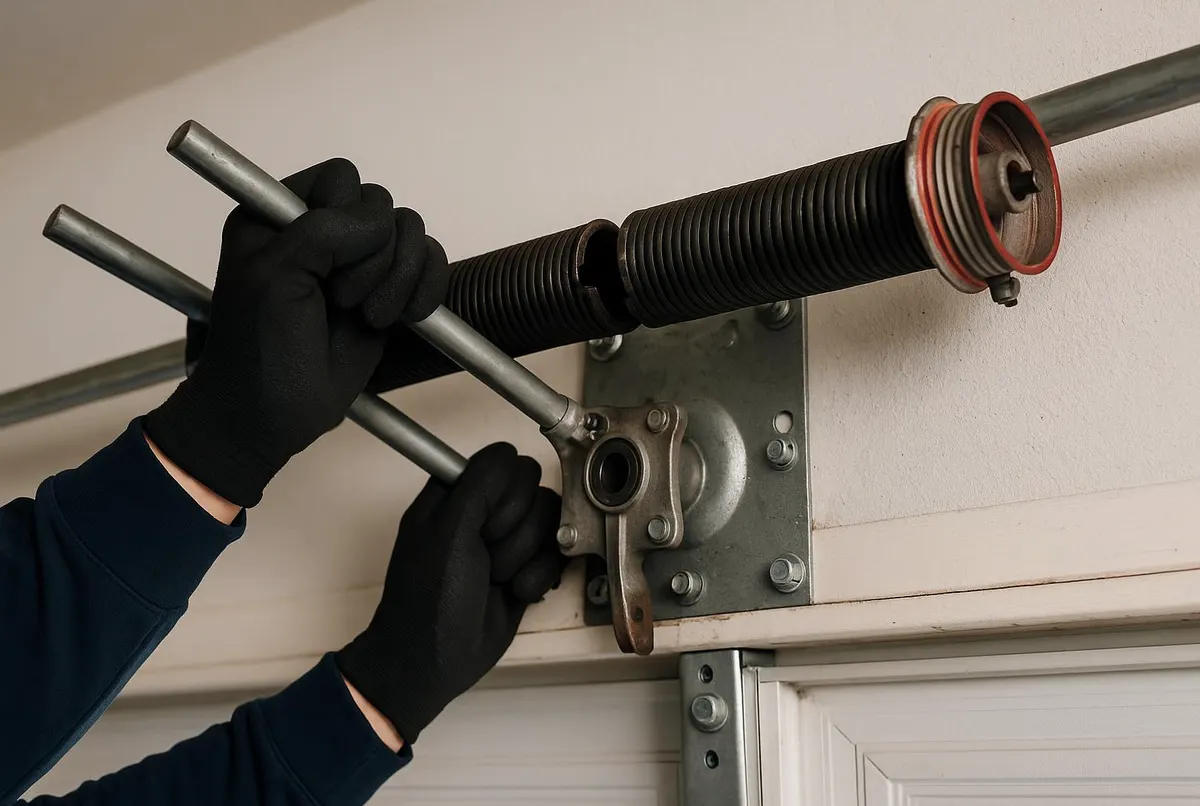
A door that's heavier on one side than it should be — because a spring is losing tension or has partially failed — will fight the opener and often trip the force sensor into reversing. This is tested by disconnecting the opener and lifting the door by hand: it should stay put at waist height. If it drops or shoots up, the spring is doing less than its job and needs replacement, not adjustment. This is also the point where safety matters most — these springs are under heavy tension and aren't a homeowner repair.
5. Opener Logic Board or Wiring
If every mechanical piece checks out and the door still misbehaves, the opener's circuit board or wiring is the last stop. Age, power surges from storm season, and moisture intrusion into the unit can all cause erratic behavior that mimics a sensor or limit problem. Sometimes it's a board reset; sometimes it's time for a new opener.
When to Call McCalla Garage Door Pro
If you've checked the sensors yourself and the door still won't cooperate, or if lifting it by hand reveals an unbalanced, heavy door, it's time to call. Our Garage Door Repair service covers the full diagnostic — sensors, limits, track, and opener — in one visit, and if the issue traces back to a weakened or broken spring, our Spring Repair & Replacement technicians handle that safely with the right tools and tension equipment. We don't guess at the cause; we check it in the order that actually finds it.
If your garage door is reversing, stalling, or refusing to close, don't wait for it to fail completely. Call McCalla Garage Door Pro for fast, reliable service throughout McCalla, AL and the surrounding area.