
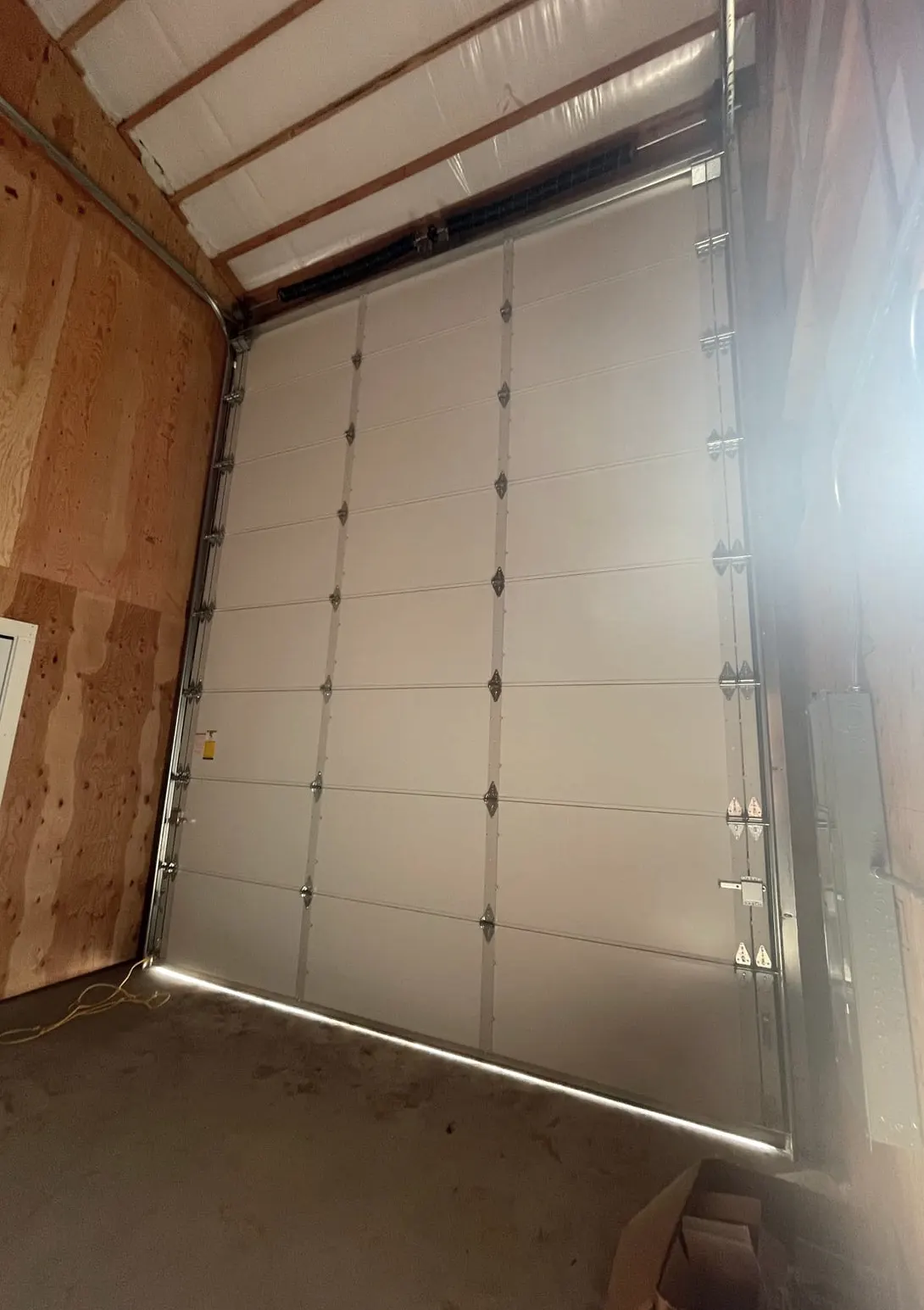
What skipping maintenance on a commercial-grade door actually costs you
Put off servicing a workshop or warehouse overhead door for one more season and you're not risking a squeaky hinge. You're risking a door that stalls mid-cycle with a vehicle half under it, a torsion spring that snaps under a load it was never rated for, or a wind-loaded panel that buckles during a fall storm and takes the track, the opener, and whatever's parked behind it along with it. A residential fix might run a couple hundred dollars. A commercial door failure, especially one that shuts down a working shop or bay for a few days, costs a lot more than that in repairs and lost time. If there's a disagreement in your house about whether "it's basically the same door, just bigger," here's what settles it.
Why they're not the same door
A residential garage door is built to cycle a handful of times a day and last for years with minimal attention. A commercial or warehouse overhead door is built for volume: heavier gauge steel, wider tracks, and hardware rated for hundreds of cycles a week instead of a handful a day. The springs are different too — commercial doors typically use torsion springs rated for tens of thousands of cycles, not the lighter-duty springs found on a standard residential system.
Openers differ as well. A home garage door usually runs on a residential chain or belt drive opener sized for a door that weighs a few hundred pounds. Commercial doors often use jackshaft operators, trolley systems, or chain hoists with higher horsepower, because the doors themselves are heavier and move more often. Safety features scale up too — photo eyes, safety edges, and monitored reversing systems are expected on a door that's cycling all day with people and equipment moving under it.
Side-by-side, in plain terms
- Weight and size: Commercial doors are larger, heavier, and often sectional steel or insulated panel construction built for wider openings.
- Cycle life: Residential doors are designed for a handful of cycles daily; commercial doors are rated for dozens or more.
- Springs: Commercial torsion springs carry a much higher cycle rating and higher load capacity.
- Opener type: Residential uses lighter chain/belt drives; commercial uses jackshaft, trolley, or hoist operators sized to the door's weight and use pattern.
- Wind and pressure rating: Larger commercial openings need engineered wind-load bracing to hold up during hurricane season gusts — this isn't optional detailing, it's structural.
What maintenance actually looks like for each one
Residential maintenance is straightforward: lubricate rollers and hinges a couple times a year, check the balance by disconnecting the opener and lifting the door by hand, and replace worn weatherstripping before it lets in water. That's roughly a once-or-twice-a-season job.
Commercial and warehouse doors need a tighter schedule because they're working harder and because a failure affects more than convenience — it can shut down a bay, a loading dock, or a workspace. A realistic maintenance routine includes:
- Inspecting cables, springs, and hinges more frequently given the higher cycle count
- Checking the opener's safety reversing system and photo eyes for proper function
- Looking for rust at the base of tracks and panels, which shows up faster here thanks to the humidity and the swelling that moisture causes in steel and wood components
- Replacing bottom seals before afternoon downpours start finding their way underneath a worn one
- Confirming wind-load bracing and hardware are still intact ahead of storm season, since a commercial-sized opening takes a lot more pressure in a gust than a standard double door
This far inland you won't deal with salt air the way coastal areas do, but the humidity and storm cycles still take a toll — rust at fasteners, swelling in wood jambs, and seals that degrade faster than people expect from a door that looks fine on the surface.
When to call McCalla Garage Door Pro
If you're running a shop, detached garage, or small commercial space and the door hasn't been inspected in a while — or if it's starting to hesitate, drag, or make a grinding noise on the way up — that's the time to get it looked at before storm season tests it. We handle both Garage Door Maintenance for routine inspections and Spring Repair & Replacement for the heavier-duty torsion systems commercial doors rely on. If a door is already stuck open, stuck shut, or acting unpredictably and you can't afford the downtime, our Emergency Garage Door Service gets a technician out to assess it and get the opening functional again.
If you've got a door in McCalla, Bessemer, Hueytown, Hoover, or anywhere nearby that's been running on luck instead of maintenance, call McCalla Garage Door Pro and let's get it checked before the next storm makes the decision for you.